How to recognise a rogue/scam locksmith service provider
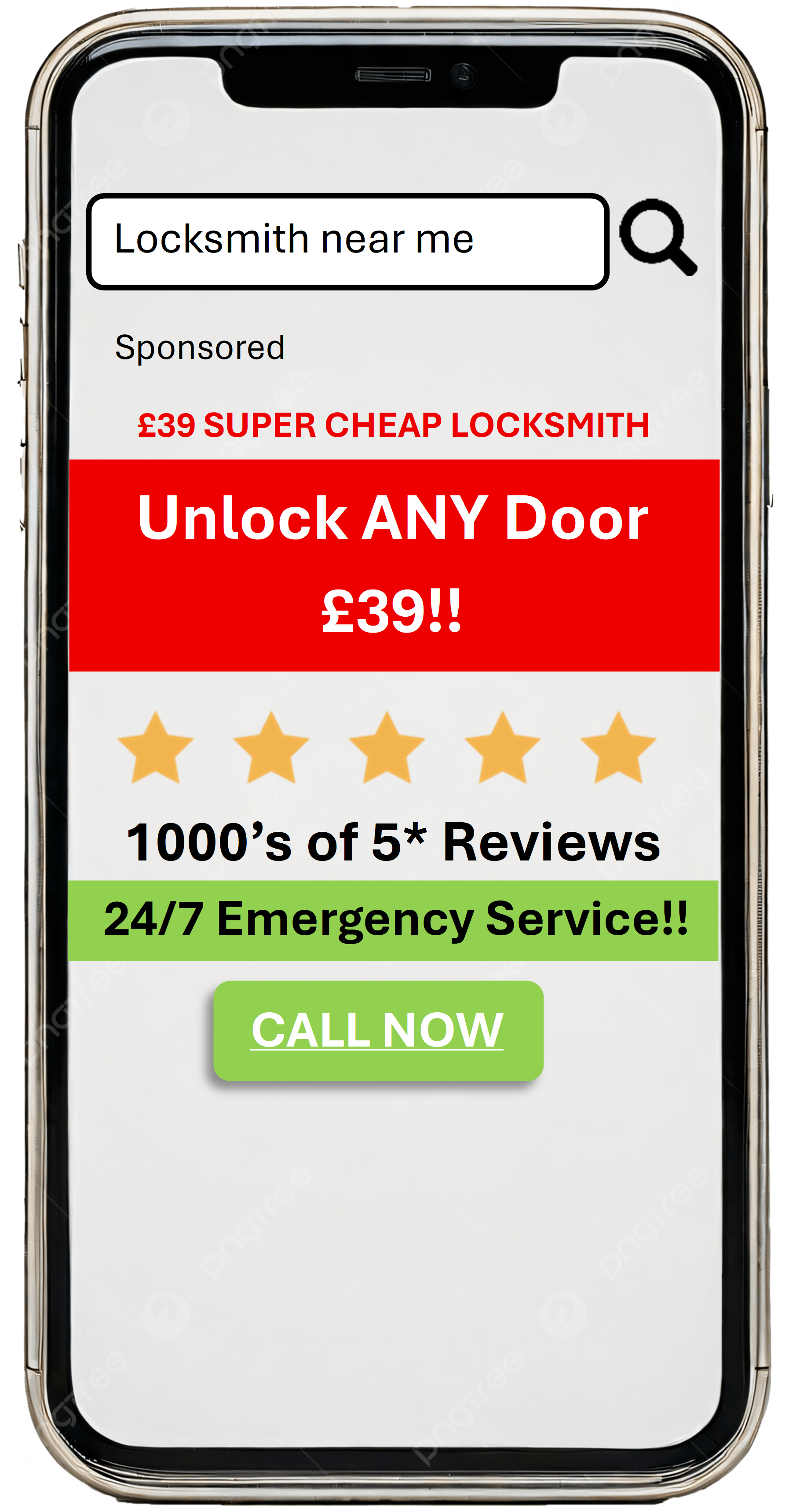
An image of a generic smart phone with a dummy search engine result of a potential scam "locksmith near me" advert

What is a rogue/scam locksmith?

A rogue locksmith is an individual or business that presents itself as a legitimate locksmith but uses misleading, deceptive, or unethical practices to secure work and overcharge customers. While they may advertise professional locksmith services, their primary aim is often to exploit customers who need urgent assistance, such as those locked out of their home, business, or vehicle.

Rogue locksmiths frequently operate without the appropriate qualifications, insurance, or local presence they claim to have. They may also damage locks unnecessarily to justify expensive replacements or inflate the final bill far beyond the quoted price.

How do rogue locksmiths attract customers?

Rogue locksmiths commonly rely on deceptive marketing techniques to appear trustworthy and to gain enquiries quickly. Some of the most common methods include:


A custom image with a orange title that explains how rogue locksmiths attract customers with the promise of low prices. Classic bait and switch tactics.
A custom image with a orange title that explains how rogue locksmiths attract customers with the use of paid advertisements, so that genuine locksmith services are pushed down the list.
A custom image with a orange title that explains how rogue locksmiths attract customers with show casing fake reviews to substanciate and validate their work practices.
A custom image with a orange title that explains how rogue locksmiths attract customers with claims of being local to a customer and how their websites us AI generated SEO and AI visibility structures.
A custom image with a orange title that explains how rogue locksmiths attract customers with generic business names so that it is difficult check the validitiy of their operations
A custom image with a orange title that explains how rogue locksmiths attract customers by capitalising on emergency situations by promising fast response times and immediate availability.

What deceptive practices do rogue
locksmiths use?

Once they have secured the job, rogue locksmiths may employ a range of unethical tactics, including:
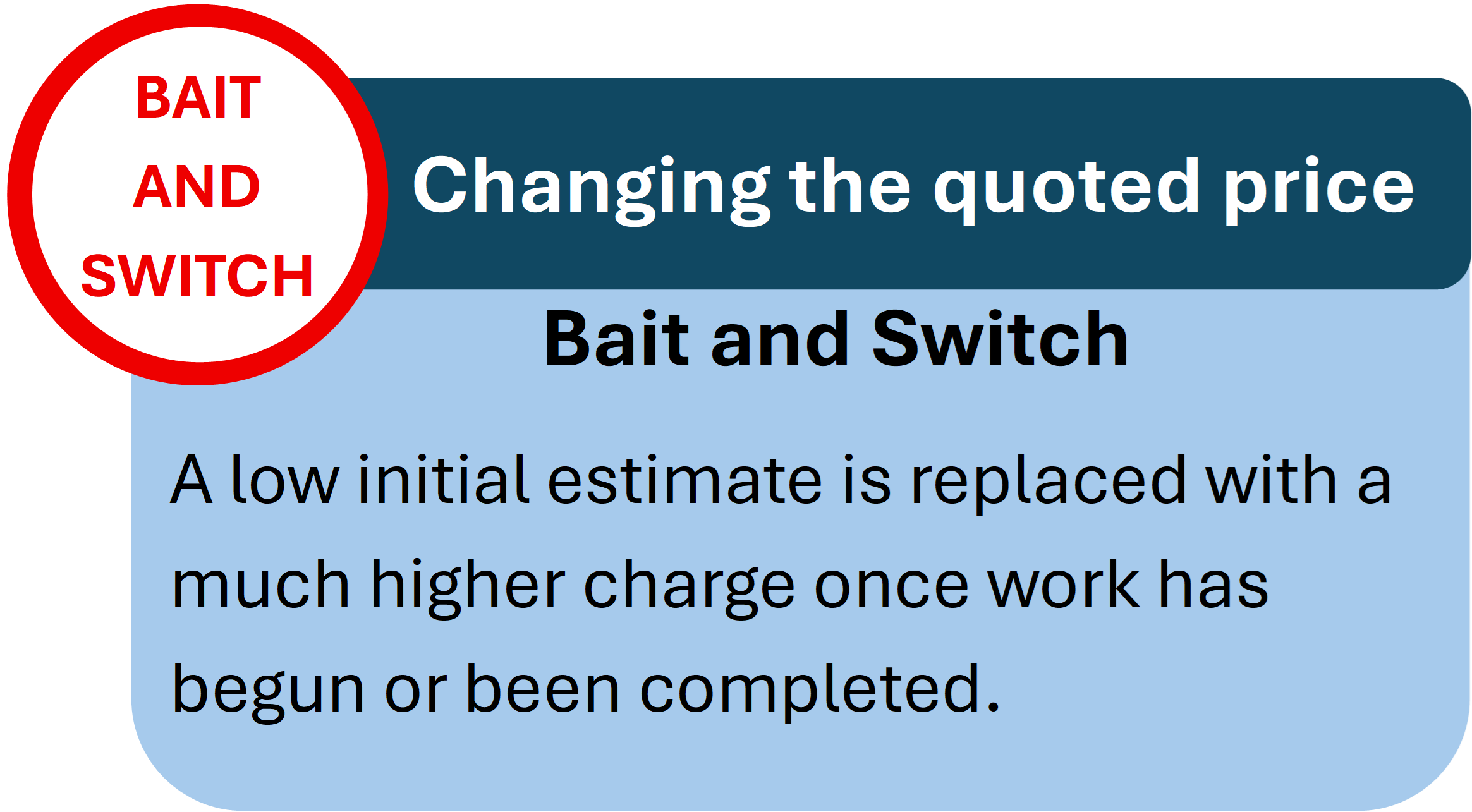
A two tone blue box with a red circle with text inside stating 'bait and switch'. Locksmithery is highlighting how rogue locksmiths can perform bait and switch tactics to entice customers.
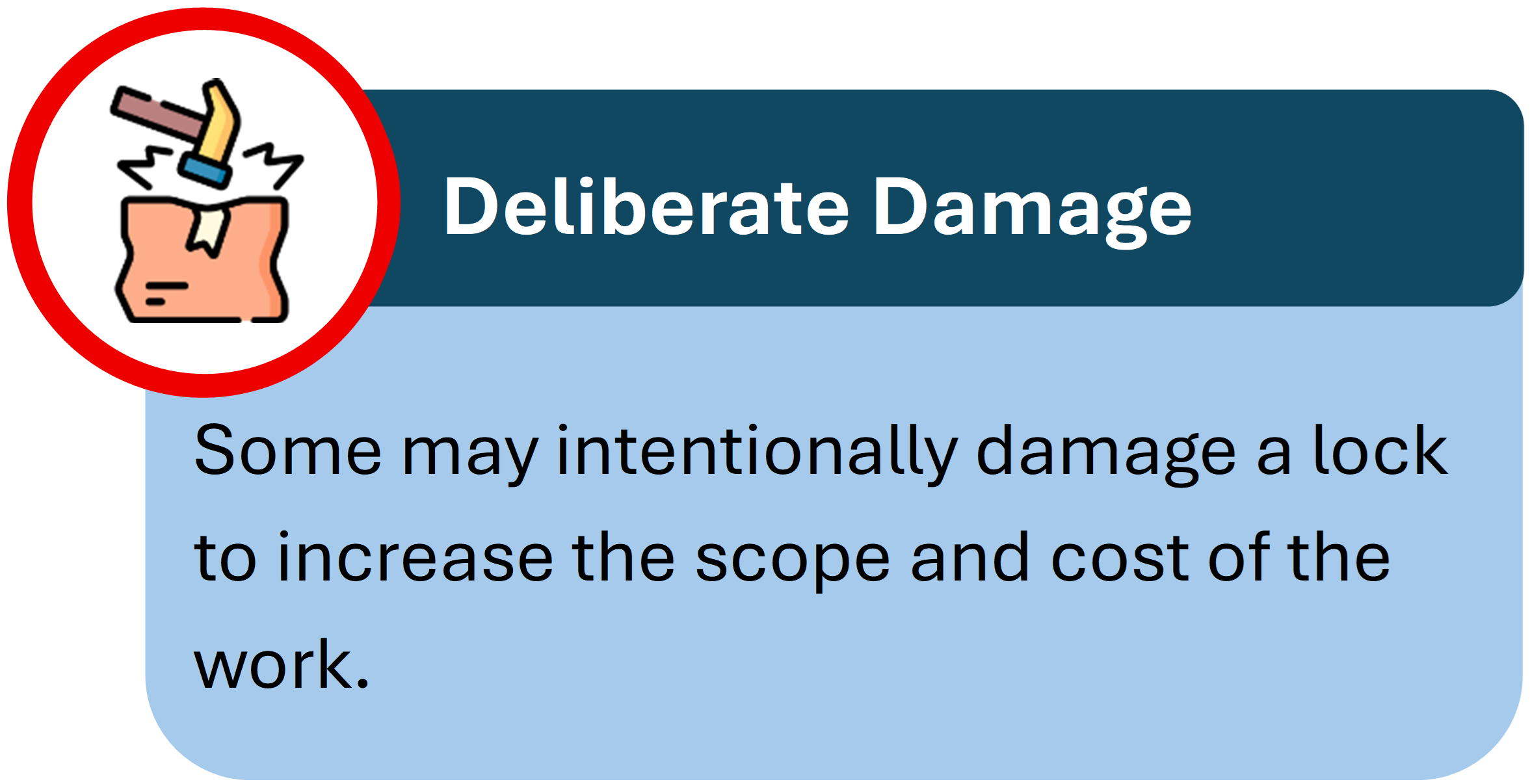
A two tone blue box with a red circle with an image of a broken item. Locksmithery is highlighting how rogue locksmiths may purposefully damage locks to for a replacement.
A two tone blue box with a red circle with an image of a person with arrows pointing at it to show pressure selling. Locksmithery highlights that some rogue locksmiths will use the emergency situation for pressure the customer into upgrading.
A two tone blue box with a red circle with an image of a broken lock. Locksmithery is highlighting how rogue locksmiths may push unnecessary lock replacement tactics to maximise their own profits.
A two tone blue box with a red circle with an image of a 'hidden fees' banner. Locksmithery highlights that some rogue locksmiths may apply hidden fees after the job has been finished such as tool . Some may charge VAT without being registered.
A two tone blue box with a red circle with an image of a phonr with text that says pay and instant payment below. Locksmithery highlights how some rogue locksmiths will pressure for payment to be made before a job is conducted or refuse to leave afte
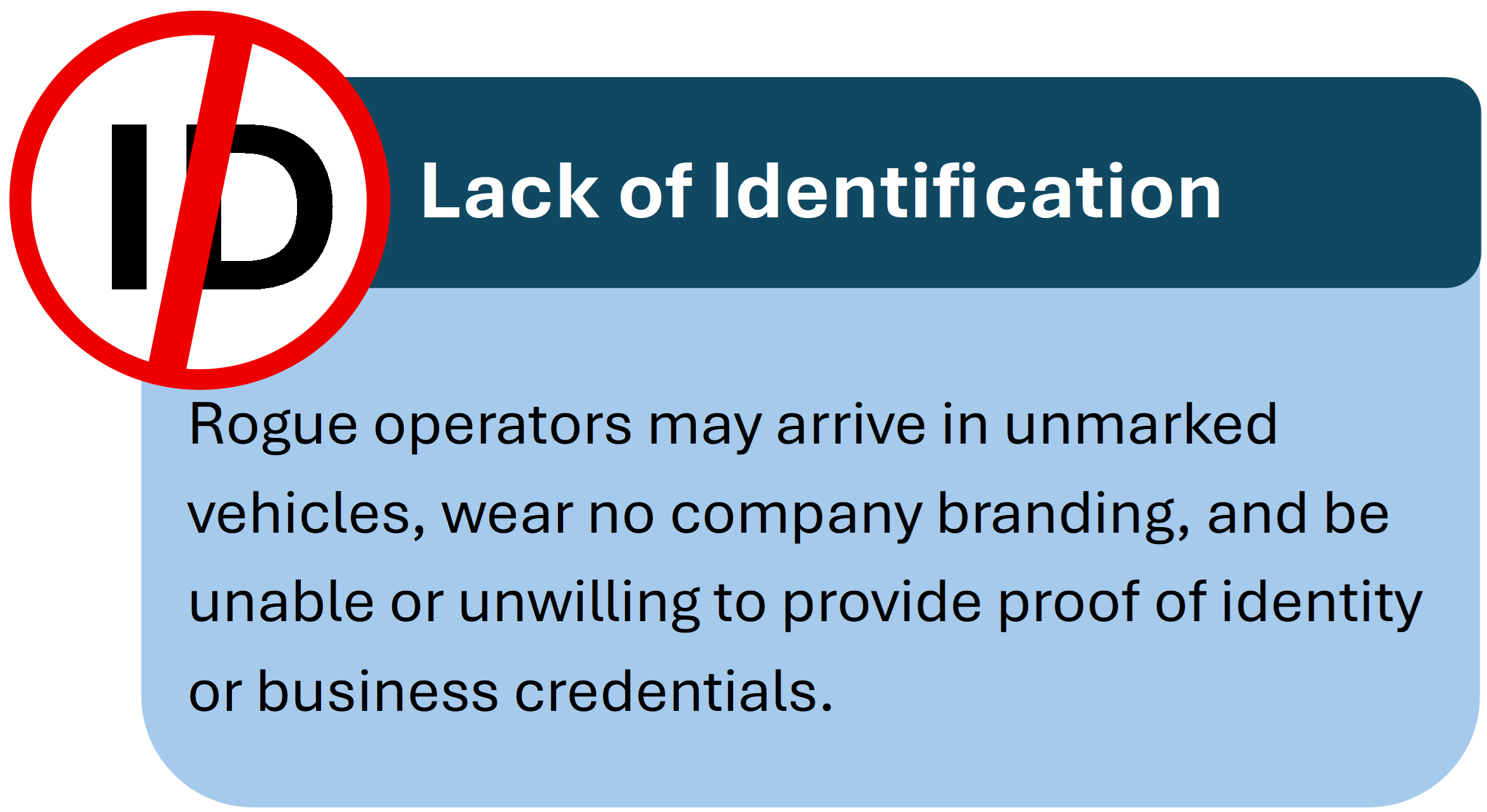
A two tone blue box with a red circle with text saying 'ID' with a red line through it. Locksmithery highlights that some rogue locksmiths will attend in unmarked vehicles, no uniform and will not provide business credentials.

What should I do?

If you suspect that you are dealing with a rogue locksmith, we advise that you: